
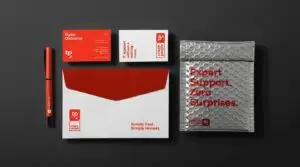
Why small startups and global enterprises alike can’t afford to show up inconsistently — and how a brand style guide fixes that forever investing in professional brand style guide services is one of the highest-leverage decisions you can make for your marketing.
Published: May 2026 | 12 min read | US · UK · AU · NZ
A business may have a sharp logo, a clever tagline, and an Instagram grid that looks great; however, when you visit the website, it can feel like a completely different company. In many cases, the fonts don’t match, the colours feel inconsistent, and the tone of voice suddenly shifts from casual to corporate mid-paragraph. As a result, customers may struggle to trust the brand or recognize its identity. Rather than being just a design issue, this disconnect reflects a brand consistency problem, and in 2026, it is becoming one of the most expensive mistakes a business can make.
The solution? A brand style guide — sometimes called a brand guidelines document, a visual identity system, or simply a brand kit. Whatever you call it, it is the single most powerful tool for making sure your brand shows up the same way, every time, everywhere.
What Do Brand Style Guide Services Actually Include?
A brand style guide — also known as a brand identity guide or brand guidelines template — is a reference document that defines how your brand looks, sounds, and behaves across every touchpoint. It covers everything from your approved logo variations and colour palette to your brand typography, tone of voice, photography style, and social media rules.
Think of it as brand’s your constitution. It doesn’t restrict creativity — it channels it. When everyone on your team (and every external agency, freelancer, or AI tool you use) is working from the same document, the result is a brand that feels intentional, professional, and trustworthy.
What do professional brand style guide services deliver?
- Logo usage guidelines — approved versions, minimum sizes, clear space rules, and what never to do with your logo
- Brand colour palette — primary and secondary colours with HEX, RGB, CMYK, and Pantone codes
- Typography system — headline fonts, body fonts, hierarchy, sizing scale, and pairing rules
- Brand voice and tone of voice — how you write, what words you use, and how your tone shifts by context
- Photography and imagery style — guidelines for visual content, illustration style, and iconography
- Social media templates and rules — sizing, layouts, caption style, and platform-specific guidance
- Brand pattern and texture library — supporting graphic elements that reinforce visual identity
- Misuse examples — showing what not to do, which is often just as important as the rules themselves
Why Brand Consistency Matters More Than Ever in 2026
The branding landscape has shifted dramatically. Today, as AI-powered search tools like Google AI Overviews, ChatGPT, and Perplexity become the first stop for product and service discovery, brand signals are now a critical SEO asset. In other words, search engines and AI agents interpret brands as entities — and they reward coherent, consistently signalled entities with higher authority and more frequent citation.
According to Interbrand’s latest trend analysis, simply being visible online is no longer enough. Instead, AI agents increasingly recommend, filter, and choose products on behalf of consumers. As a result, brands that lack visual and tonal consistency across their digital presence risk being overlooked entirely — not because they are bad, but because they appear fragmented.
“In 2026, AI agents are becoming new gatekeepers of the consumer journey. The brands that win will be those that AI sees as credible and authoritative — and consistency is the foundation of that credibility.”
This makes a brand style guide a marketing asset, an SEO asset, and a competitive advantage, all in one document.
Key stats that make the case:
- Consistent brand presentation leads to 3.5× more brand visibility on average
- Businesses with consistent branding see an average 23% revenue increase
- Searches for “simple branding” and “clean layout” climbed 54% year-on-year in 2026 (Canva)
- Websites appearing in AI-generated answers receive 15–20% more organic traffic than comparable sites not cited (Semrush, 2026)
Brand Style Guides for Brand Style Guide Services for Small Businesses 2026
One of the most common misconceptions is that brand guidelines are only for large corporations with in-house design teams. In reality, small businesses arguably need them more — because every touchpoint matters more when you have fewer of them.
A small business brand style guide doesn’t need to be 80 pages. A clean, well-structured document of even 10–15 pages covering your logo, colours, fonts, and tone of voice will pay dividends immediately.
Why brand style guide services pay off even for solo founders
Even a sole trader or micro-business is likely using a web designer, a social media scheduler, a print supplier, and perhaps a copywriter. Without a brand guide, each of these people makes their own visual decisions. With one, they all sing from the same sheet.
AI-generated content needs guardrails
In 2026, most small businesses use AI tools to generate marketing copy, social captions, and even visuals. Without a brand style guide, there’s nothing to align those outputs to. AI models can spin up logos and website layouts faster than a creative brief can be approved — but speed without consistency destroys brand equity.
Investors and clients want to see it
Whether you’re pitching to investors, applying for a business grant, or onboarding a major client, having a professional brand guidelines document signals that you take your brand seriously. It’s a credibility marker that larger organisations immediately recognise.
Quick win for small businesses: Start with a one-page brand board — your logo, your hex codes, your two fonts, and three words that describe your brand personality. That single page will immediately improve the consistency of everything your business produces.
Brand Style Guide Services for Large Enterprises: The System Behind the Scale
For mid-size and enterprise organisations, a brand style guide evolves into a full design system — a living, versioned document that governs every brand expression across every market, platform, language, and team.
Large brands face a different challenge: not inconsistency from neglect, but inconsistency from scale. When you have hundreds of employees, dozens of agencies, and operations across the US, UK, Australia, and New Zealand simultaneously, your brand guidelines need to be both comprehensive and adaptable.
Adaptive identity systems are the 2026 standard
The leading trend in enterprise branding for 2026 is minimalist, adaptive identity. Rather than a single rigid logo or a fixed design style, brands are building systems that stay clean and consistent at their core while the surface-level visuals respond to context — the platform, the audience, the season. Netflix’s animated logo ribbon is a prime example: the static mark is simple, but the motion becomes a recognisable brand signature.
Flexible colour palettes over fixed schemes
Instead of fixed palettes, leading enterprise brands are now documenting variable colour themes that can shift and evolve while remaining recognisably on-brand. This allows for seasonal campaigns, accessibility adaptations, and platform-native executions without breaking brand consistency.
Motion and interaction design guidelines
In 2026, a brand isn’t just judged by how it looks but by how it behaves. Enterprise brand guides now routinely include motion design principles — the speed, easing, and personality of animations — because these micro-interactions have become as distinctive as a colour or typeface.
Small Business vs. Enterprise: What Goes in Each Guide
| Element | Small Business Guide | Enterprise Design System |
|---|---|---|
| Logo guidelines | Approved versions, clear space, don’ts | Full logo ecosystem, sub-brand rules, adaptive lockups |
| Colour palette | Primary + 2–3 secondary colours with codes | Variable colour themes, accessibility grades, dark mode specs |
| Typography | 1–2 font families, basic hierarchy | Full type scale, responsive sizing, multilingual guidance |
| Tone of voice | Brand personality, do/don’t phrases | Full editorial style guide, localisation rules, AI prompt guidelines |
| Digital assets | Social templates, email header | Component library, motion design system, code tokens |
| Governance | Owner named, version noted | Version control, approval workflows, regional exceptions |
What Modern Brand Style Guide Services Include in 2026
Brand guidelines aren’t static documents. In fact, in 2026, several new forces are reshaping what belongs inside a modern brand style guide.
AI content generation rules
Your brand guide now needs to include guidance for AI-generated content. For example, this means defining approved prompts for tone and style, establishing which AI tools are brand-approved, and documenting what outputs need human review before publishing. Brands that treat AI as an assistant that extends their brand system — rather than a random idea machine — are maintaining coherent identities in the age of generative content.
Imperfect, human-centred aesthetics
One of the most significant shifts in brand design for 2026 is the move toward what Canva has called “imperfect by design.” After years of AI-smooth perfection and over-polished branding, audiences are craving proof that a human made something. As a result, brands are increasingly leaning into authenticity and more human-centred aesthetics. Your brand guide should clearly articulate whether your identity embraces this authenticity or deliberately maintains a polished, premium feel — and why.
Motion and sensory design principles
Motion, sound, and interaction are now taking a larger space in the design landscape. Additionally, even small businesses publishing short-form video content need to document how their brand behaves in motion — including the speed of transitions, the use of music or sound effects, and the personality of their animation style.
Social-first and platform-native rules
Your brand guide needs platform-specific guidance for every channel your business uses — Instagram, TikTok, LinkedIn, YouTube, and beyond. Each platform has its own visual grammar; however, your brand still needs to feel native to each while remaining unmistakably consistent.
How Brand Style Guide Services Work: A Step-by-Step Framework
Creating your brand style guide doesn’t require a six-figure agency retainer. Instead, it requires clarity, consistency, and commitment.
Step 1 — Audit what you already have
First, gather every asset your brand currently uses: logos, fonts, colours, templates, and social content. Lay them out and look for inconsistencies. What varies? What’s non-negotiable? Ultimately, this audit becomes the foundation of your guide.
Step 2 — Define your brand identity core
Next, before defining how your brand looks, define what it stands for. Mission, vision, values, target audience, and brand personality all feed directly into visual and verbal decisions. Without this foundation, a brand guide becomes just a style sheet — and it won’t survive the first major campaign.
Step 3 — Document your visual system
Then, document your logo usage, colour palette, typography hierarchy, supporting graphic elements, and photography direction. In addition, provide clear examples that demonstrate both the correct and incorrect ways to apply these assets.
Step 4 — Define your brand voice guidelines
After that, define your tone of voice with specific examples. What words do you use? What words do you avoid? How do you handle humour? Similarly, consider how your tone shifts between a customer complaint and a product launch. The best voice guides include before-and-after rewrites that show the principles in action.
Step 5 — Build your asset library
Furthermore, a brand guide without assets is a guide no one will use. Build a living library of approved templates — including social posts, email headers, presentation decks, and document covers. As a result, your team can quickly find the right file and use it correctly.
Step 6 — Assign ownership and set a review schedule
Finally, assign clear ownership of the brand guide. Set a review date at least once a year. Otherwise, a guide written in 2022 and never updated may do more harm than good.
Brand Style Guide vs. Brand Guidelines vs. Design System: What’s the Difference?
These terms are often used interchangeably; however, they describe different things at different scales.
A brand style guide is the broadest term because it covers visual and verbal identity rules for general use. Brand guidelines typically refer to the same document with a stronger focus on the dos and don’ts of brand application. Meanwhile, a design system is a more technical, developer-facing version that includes coded components, design tokens, and interaction patterns. In other words, it is where brand guidelines meet product design.
For most small and mid-size businesses, a brand style guide is exactly what you need. However, a full design system becomes relevant when you have a digital product — such as an app or software platform — with designers and developers working simultaneously.
The ROI of Brand Style Guide Services
The business case for investing in a brand style guide has never been stronger.
- 10× return on brand consistency investment over three years (Forbes, 2025)
- 68% of consumers say consistent branding builds trust
- 33% faster creative production with a brand guide in place
- Consistent brand entities are more frequently cited in AI-generated search answers, directly improving organic visibility
In the context of digital marketing and SEO, the case is even clearer. Search engines and AI tools now treat brands as entities. Therefore, entity recognition depends on consistent signals across every platform. A business with a coherent visual and verbal identity across its website, social media, Google Business Profile, and press coverage is far more likely to appear in AI-generated search results than a competitor whose branding varies wildly between channels.
Your brand style guide is your business’s most leveraged investment. Because of this, every marketing activity becomes more effective, since everything it touches becomes unmistakably, consistently, and memorably yours.
Ready to Invest in Brand Style Guide Services?
Whether you’re a solo founder in Auckland building your first product, a boutique agency in London rebranding for growth, a retail business in Sydney scaling nationally, or a corporate enterprise in New York City managing a global identity, a brand style guide is not a luxury. Instead, it is the foundation on which every other brand investment will either stand or collapse.
Ultimately, the question in 2026 is no longer whether you need a brand style guide. The real question is whether your current guide is keeping pace with how quickly the world is changing — and whether it is built for the AI-powered, motion-first, authenticity-driven landscape that modern brands must navigate today.
If it isn’t, today is the best day to start.
7 AI Website Design Webflow Trends Transforming Web Development in 2026
How AI Website Design Webflow Solutions Are Revolutionizing the Web1. Adaptive Design Automation2. Intelligent Multilingual CMS Configuration3. Interactive 3D Experiences…